

Vermont Afterschool is proud to be partnering with STEM Next to make out-of-school STEM opportunities a reality for Vermont’s young people, to help them thrive in STEM and beyond. Through afterschool and summer programs, we believe every child should have STEM opportunities that inspire curiosity, innovation, and the critical thinking skills for whatever comes next.
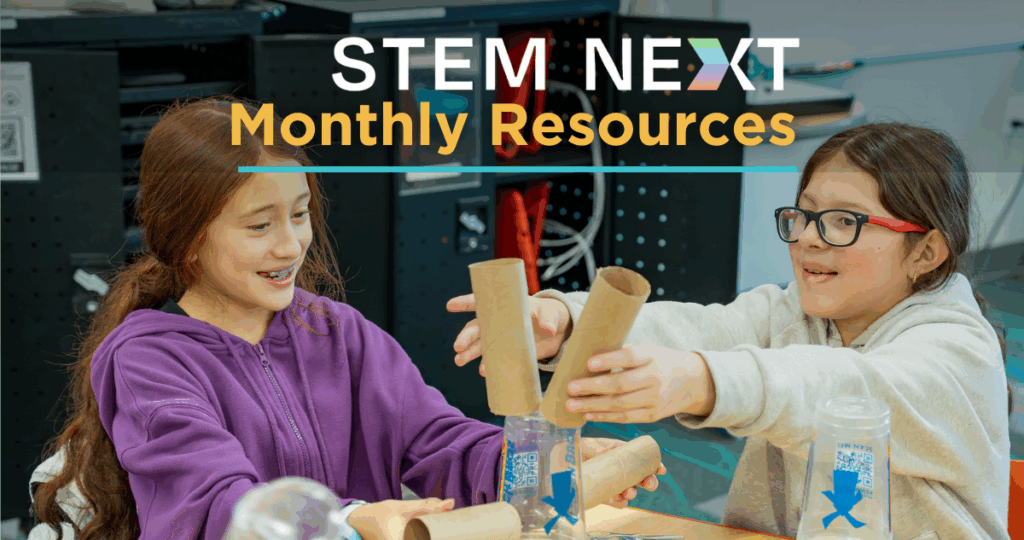

March brings new ways to spark curiosity, explore careers, and connect STEM learning to the real world through space exploration, health sciences, and computer science. These opportunities are designed for afterschool and summer programs looking for flexible, engaging, and career-connected STEM experiences.
The National Summer Learning Association (NSLA) works to ensure all of America’s students, regardless of background, income, or zip code, can access and benefit from a high-quality summer learning experience every year. Check out
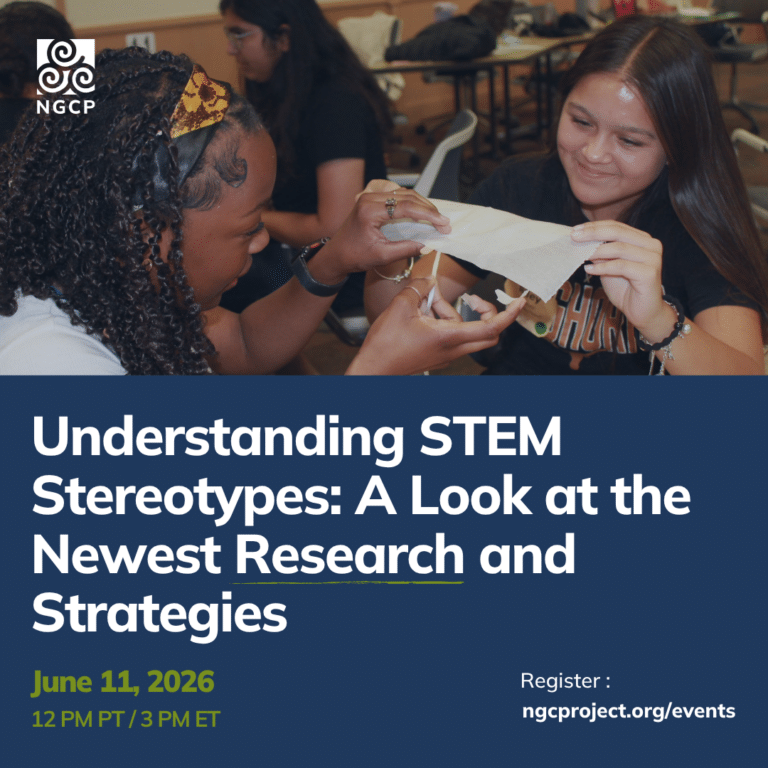
Join NGCP and Dr. Allison Master June 11, 2026 (3:00 PM EST) for a deep dive into the latest evidence on how STEM stereotypes are evolving — and where the most critical work remains.
While progress has been made in fields like math and science, new research reveals that computer science and engineering stereotypes remain a significant barrier, forming as early as age six. In this webinar, we will explore how specific stereotypes impact interest and belonging differently across STEM disciplines. Participants will leave this webinar with practical strategies on how to empower all young learners to be the innovators of tomorrow.
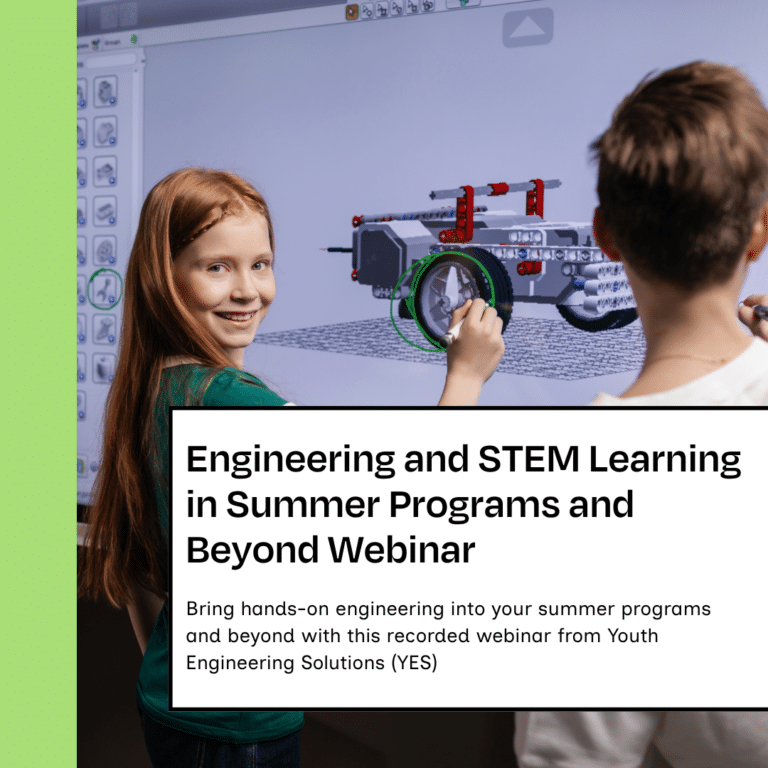
In this webinar, you’ll explore a free, easy-to-use engineering curriculum filled with fun, challenge-based activities that help youth build problem-solving, collaboration, and critical-thinking skills.
You’ll also be introduced to Career Explorations activities that help young people connect what they’re designing to real-world STEM and STEM-adjacent careers.
Whether you’re brand new to engineering activities or looking for fresh ideas to energize your program, this webinar will leave you feeling confident and inspired to engage youth in meaningful STEM learning.
Tilly Lockey is one of the youngest and most inspiring women in STEM fields, known for championing the fusion of AI, technology and human empowerment. A UK-based artist and bionic arm ambassador, she co-developed the AI-powered Hero Arm with Open Bionics from the age of nine, helping transform the future of prosthetics. After losing both hands to meningococcal septicaemia as a baby, Tilly turned adversity into innovation, creating lightweight, muscle-responsive bionic limbs that prioritise individuality and function. Ready to build your own prosthetic arm? Check out the resources below:
Hands On Activity: The Power in Prosthetics (Grade 3–5) — Youth create a functional prosthetic hand that will be useful for day-to-day tasks. The prototype will need to include moveable fingers that bend to pick up a small Styrofoam cup, a large foam die, and a whiteboard eraser. Youth will be paired into groups of two to begin planning, designing, and building their prototype. Each group will then test and evaluate their prototype by using it to pick up materials as listed above. Youth will improve their prototype as needed.
Hands On Activity: Make a Robot Hand Using Drinking Straws (Grades 3–8) — Imagine how cool it would be to build a robot hand that could grasp a ball or pick up a toy. In this robotics engineering project, you will learn how to use drinking straws, sewing thread, and a little glue to make a remarkably lifelike and useful robot hand. What will you design your robot hand to do? Pick up a can? Move around a ping pong ball? It is up to you! With these starting instructions, you can design any type of hand. You will simulate human finger anatomy as the basis for a fully functional robot hand that is easy to build and does not require complicated tools.
Middle schoolers don’t have to pick a career yet—but research shows they’re already curious and eager to explore what’s possible. This article provides 8 concrete ways educators can spark career exploration and knowledge in middle school youth. Click Here to Read the Article.
