What if I told you that a 5 second interaction with a child can boost the morale of your students and help that child be more successful in your program? What if those 5 seconds were as easy as giving a friendly greeting to every child as they walked through the door to your program? Curious to know more? Keep reading!
If you told me that there are entire research studies dedicated to looking at the outcomes of belonging for children who receive a warm, friendly greeting on their way into their classroom, I would not have believed you. How could it be? How could something so simple be connected to students’ successful work habits, engagement at school, connection with their peers, and positive identity development?
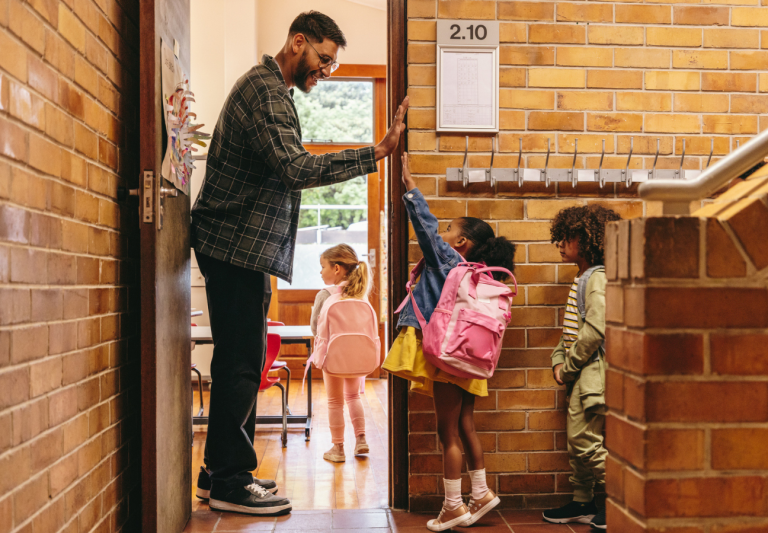
Positive Door Greetings, or PDGs, have been shown to increase students’ sense of belonging, promote self-esteem, and reduce truancy among students. Belonging is a powerful proactive, protective, and inclusive strategy to address disconnects youth may feel within their school, and the importance of being in a learning community where they feel seen, appreciated, and heard. This sense of belonging may, in turn, create stronger relationships between program staff and students, and over time reduce instances of challenging or disruptive behaviors. When we have good relationships with our kids, it is easier to have corrective conversations about their behavior.
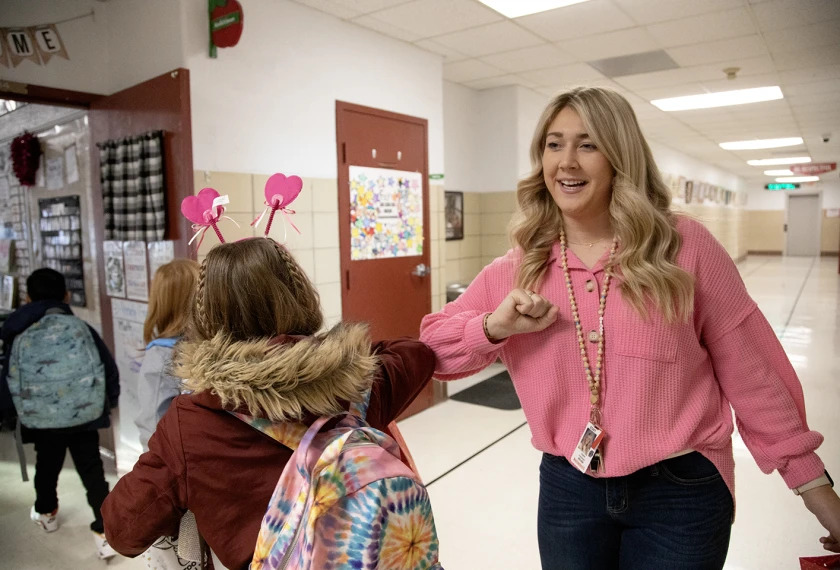
So what exactly goes into PDGs that make them so magical? Let’s break down some of their components (note, you don’t need to do all of these, even a few are great!):
- Having someone, or multiple people, standing at the door of the space where students enter
- Making eye contact with the youth and smiling
- Saying, “Hello! Good morning/afternoon, how are you?/What’s up?/How’s it going?” etc.
- Offering a handshake, high-five, fist-bump, elbow-bump, hug, wave, whatever you want
- Telling them you are happy to see them in the program and/or glad they made it to school today
- If appropriate, a brief conversation about an event or occasion the student previously disclosed would be welcome (for example, asking them how their sports game went or about their weekend plans they were excited about)
If you’re thinking “Well, Marla, this is great, but we are short staffed/overwhelmed/unable to add another thing on our plate…” do not worry. Try this out when you have the capacity to, and perhaps this is an opportunity to collaborate with other staff who aren’t necessarily part of afterschool programs but willing to help out for the first few minutes and greet students then leave (administrators, custodial staff, school nurse, guidance counselors, parent or high school volunteers, get creative!).
Happy Greetings!
Marla Goldstein
Youth Resilience Coordinator